Insights
B2B Event Marketing: A Practical Guide to Executive Dinners and Curated Experiences
Short answer
B2B event marketing brings a defined business audience together to learn, build relationships, and explore relevant commercial opportunities. Formats include executive dinners, workshops, shared experiences, conference gatherings, and recurring peer groups. Start with the people you want to serve and the outcome they value, then choose the format, budget, and measurement plan.
By Ed Giansante · Published
B2B event marketing brings a defined business audience together to learn, build relationships, and explore relevant commercial opportunities. Formats include executive dinners, workshops, shared experiences, conference gatherings, and recurring peer groups. Start with the people you want to serve and the outcome they value, then choose the format, budget, and measurement plan.
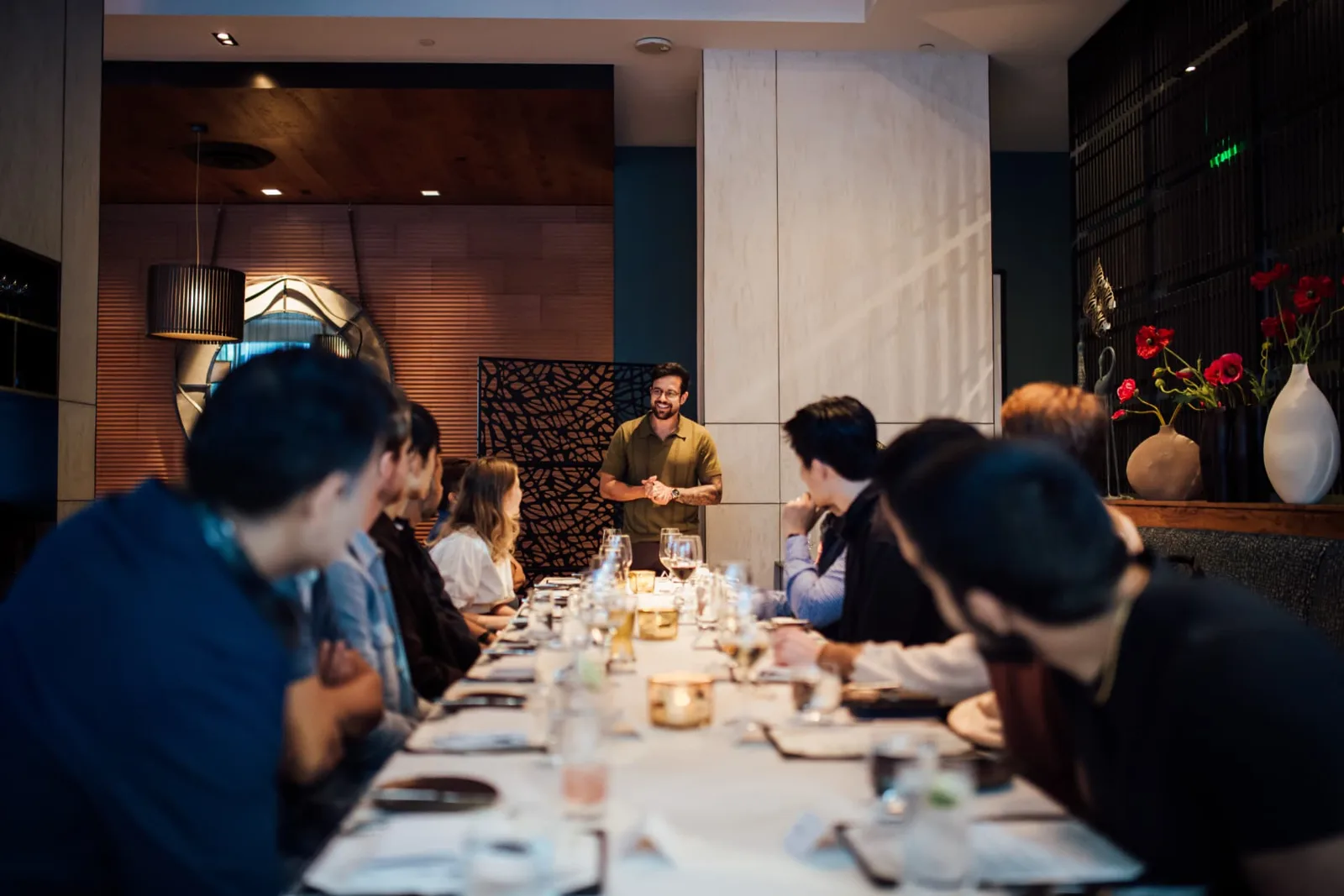
Getting someone to spend an evening with your brand is a pretty big deal. They have moved things around, crossed the city, and walked into a room where they might not know anybody.
I think about that when I host events. Once someone makes that effort, you owe them an experience worth showing up for.
My work in community has taken me from bringing Brazilians together in Ireland to hosting founders and business leaders in the US. The detail I keep coming back to is how much happens before anyone takes a seat: choosing the guests, understanding their challenges, and giving them a useful reason to meet.
This guide is how I would approach a B2B event program, especially if you are a founder or marketing leader planning your first executive dinner or considering a recurring series.
What should a B2B event accomplish?
A B2B event should create value for guests while supporting a specific business objective. That objective might be starting relationships with target accounts, helping existing customers exchange ideas, teaching a practical skill, or developing a peer community.
Choose one primary objective before booking a venue. “Get our name out there” leaves too many decisions unresolved.
For example, a company selling to finance leaders could bring together people managing their first international expansion. Guests get relevant peers to learn from; the host gets a better understanding of its market and opportunities to continue useful conversations.
Write a one-sentence brief: “We are bringing [specific people] together to discuss [shared challenge], so they leave with [useful outcome].” Then add the commercial objective separately, so the team understands both responsibilities.
Which B2B event format should you choose?
Choose an executive dinner for focused peer conversation, a workshop for practical learning, a shared experience for informal connection, a conference gathering for access to a concentrated audience, or a recurring group for relationships that develop over time.
| Format | Best starting objective | What guests should leave with | Common mistake |
|---|---|---|---|
| Executive dinner | Build relevant peer relationships | Useful perspectives and introductions | Selecting guests by title alone |
| Shared experience | Make informal connection easier | A worthwhile experience and new connections | Choosing an activity guests cannot comfortably join |
| Practical workshop | Help an audience solve a defined problem | A completed exercise or usable plan | Turning the session into a long demonstration |
| Conference gathering | Connect a focused group already in town | A relevant conversation with manageable logistics | Booking too far from the main event |
| Recurring peer group | Build continuity across meetings | Trusted peers and continuing support | Launching without an owner or sustainable cadence |
LE SUPPER / FIELD GUIDE
Choose the event around the job
Five formats, five different reasons for someone to attend.
Executive dinner
12–16 people with a shared business challenge
Build relevant peer relationships
Shared experience
A small wellness session, hike, or cooking class
Create space for informal connection
Practical workshop
A working session with a concrete deliverable
Help people solve one problem
Conference gathering
Breakfast or dinner near the main event
Connect a focused group during a busy week
Recurring peer group
A consistent group with a clear member profile
Develop relationships across multiple meetings
1. Executive dinners: start with the guest list
An executive dinner is a small, hosted meal for business leaders selected around a relevant topic or shared responsibility. For a first dinner, I recommend aiming for 12–16 guests; that is a planning preference, rather than a universal attendance rule.
The guest list takes real work. “Founders in San Francisco” describes people who could have very different needs. “Founders making their first enterprise sales hires” gives them something specific to compare.
Start by writing down why these particular people would want to meet one another. If the answer is weak, keep working on the list.
Then design the experience around conversation. Check the acoustics, table shape, arrival experience, and whether the room offers enough privacy for the topic. A beautiful restaurant becomes a difficult choice if nobody can hear across the table.
Prepare a few questions that encourage people to share experience. “What surprised you about your first enterprise hire?” gives the room more to work with than a round of company pitches.
As the host, notice who has barely spoken and who could benefit from an introduction. Give the conversation direction while allowing people to follow something useful that emerges.
Sponsors should be identified in the invitation, with clear expectations about their participation. A sponsor can contribute thoughtful questions and relevant experience without requiring guests to sit through a presentation.
2. Shared experiences: give conversation somewhere to start
A shared experience brings a small business audience together around an activity, such as a cooking class, a hike, or a wellness session. It can make conversation easier because people have something to participate in together.
I like that guests have a reason to attend beyond the possibility of meeting a future customer. They may simply appreciate an evening to decompress with people who understand their working life.
Choose the activity around the audience. Explain physical requirements, accessibility, what to bring, and whether there are comfortable alternatives for someone who wants to skip part of it.
Protect time before or afterward for people to talk. If everyone finishes the activity and immediately leaves, you have fewer chances to help a promising conversation continue.
Keep the brand's role clear and proportionate. Thoughtful hosting can be enough. Please let someone finish the ice bath before asking about their software budget.
3. Practical workshops: help people make progress
A B2B workshop is a working session in which attendees learn and apply a skill relevant to their role. It works best when the invitation names a concrete output, such as a draft referral program or an improved onboarding flow.
Keep the scope small enough to deliver. “Leave with a draft plan for your first customer advisory board” gives guests a clearer expectation than “learn everything about customer engagement.”
Bring a facilitator who can teach, give feedback, and manage the room. Someone who knows a product well may still need support to lead a useful workshop.
Give attendees time to work with their own situation. A sample exercise helps, but applying the idea to a real problem is where the session becomes valuable.
If the product supports the task, demonstrate its role transparently. Guests should understand the commercial context before attending and still get something useful from the session.
4. Conference gatherings: make the logistics easy
A conference gathering is a focused side event held around an industry conference or busy event week. Its advantage is proximity to an audience already in the city, though those guests may also have crowded calendars.
Give the gathering a specific reason to exist: a breakfast for founders entering the US market, for example, or a dinner for community leaders managing small teams.
Choose a location that fits the rest of their day. Check travel time against the actual conference venue and schedule, rather than judging distance on a map alone.
Decide what energy you want to offer. After a full day of sessions, some people want music and a large crowd; others want a quiet table and a proper meal. Build deliberately for the people you are inviting.
Be precise about arrival, food, and finish time. Respecting a guest's schedule is part of the experience.
5. Recurring peer groups: give relationships continuity
A recurring peer group brings a defined set of people together across several meetings. Repetition gives members opportunities to build context, follow through on introductions, and hear how previous decisions worked out.
Someone mentions a difficult hire at one dinner. At the next meeting, another member asks how it went. Those small moments make the group more useful over time.
Define membership around a meaningful shared situation. “People building their first community team inside a B2B company” gives members a clearer expectation than “senior leaders.”
Choose a cadence you can sustain, whether monthly or quarterly. Assign someone to manage the relationships between gatherings, welcome new members, and understand how the group's needs are changing.
Set expectations around confidentiality, selling, and contacting other members. Charging a fee is a business-model choice; commitment also depends on relevance, consistency, and the experience you deliver.
How do you curate an executive dinner guest list?
Curate around shared relevance, the ability to contribute, and enough variety to make the conversation useful. A senior title alone does not tell you whether someone belongs in a particular room.
Use four questions when reviewing a guest:
- Does this person share the challenge or responsibility the dinner addresses?
- Can they contribute relevant experience and learn from the others?
- Does their perspective add something useful to the existing mix?
- Is the timing and format appropriate for them?
Avoid filling every seat with people you hope to sell to. Existing customers, practitioners, and peers can add context, provided there is a clear reason for each person to attend.
Track the invitation process: invited, interested, confirmed, declined, attended, and canceled. Ask about dietary and access needs early enough to act on the answers.
Make any contact-sharing arrangements explicit. Attendance should not be treated as blanket permission to distribute personal details or add people to unrelated marketing lists.
How do you plan an executive dinner?
Plan an executive dinner by defining the audience and purpose, setting the budget, selecting a suitable venue, curating guests, preparing the host, and designing follow-up before the event takes place.
LE SUPPER / FIELD GUIDE
The dinner starts weeks before the table
Suggested sequence for a first B2B executive dinner.
3–4 weeks before
Define the room
One audience, one shared challenge, one useful outcome.
2–3 weeks before
Curate and invite
Check relevance; explain the host, sponsor, and format.
Week of the event
Confirm and prepare
Finalize seating, dietary needs, accessibility, and prompts.
Event evening
Host with attention
Welcome guests, connect peers, and protect conversation.
Within 48 hours
Follow through
Send promised resources and permission-based introductions.
30 / 60 / 90 days
Review outcomes
Record meetings and opportunity changes; deduplicate.
The timeline above is a suggested starting sequence. Hard-to-reach guests, conference weeks, and venue availability may require more lead time.
Before the event
Write the brief, agree on the commercial objective, and define how the sponsor will participate. Set a full budget that includes the work required to recruit and host the room.
Confirm the venue's total charges, cancellation terms, privacy, accessibility, and food arrangements. Check the experience in person when practical, especially noise levels during the hours you intend to host.
Send personal invitations that explain who the dinner is for, why the topic matters, who is hosting, and what guests can expect. Confirm attendance and prepare a seating plan that helps relevant people meet.
During the event
Welcome guests individually and make useful introductions as they arrive. Explain the conversation format and any confidentiality expectations before sensitive discussion begins.
A simple two-and-a-half-hour agenda could include 30 minutes for arrivals, 15 minutes for introductions, 75 minutes for dinner and guided conversation, and 30 minutes for open conversation. Adjust to the venue and audience.
Take only the notes and photos guests have agreed to. Pay attention to the room rather than spending the evening trying to document it.
After the event
Within 48 hours, send promised resources and offer relevant introductions with permission. Record attendance and meaningful follow-up in the CRM.
At agreed checkpoints, review meetings, customer feedback, introductions, and opportunity changes. Use what you learn to improve the next guest list and format.
How much does an executive dinner cost?
An executive dinner budget depends on the city, venue minimum, guest count, food and beverage, privacy requirements, production, and the work involved in recruiting and hosting guests. Separate the restaurant bill from the full cost of the program.
The following is an illustrative planning budget for a 14-person dinner. It is not a Le Supper quote or a market-average price.
| Cost category | Illustrative amount |
|---|---|
| Food and beverage | $2,800 |
| Private-room or venue fee | $1,000 |
| Taxes, service charges, and gratuity allowance | $1,000 |
| Guest research, invitations, and coordination | $2,500 |
| Host, facilitation, and on-site support | $1,500 |
| Materials and optional photography | $500 |
| Contingency | $700 |
| Total illustrative cost | $10,000 |
Ask whether a venue fee is additional to a minimum spend, whether service includes gratuity, and which charges are taxable. Replace every allowance with confirmed quotes before committing.
For this example, cost per attendee is approximately $714 if all 14 guests attend, or approximately $833 if 12 attend. If your goal is target-account engagement, also calculate cost per relevant account represented.
How should a B2B event sponsorship work?
A useful sponsorship agreement defines the audience, the experience, the sponsor's role, and the reporting the organizer can deliver. Be specific about deliverables and careful about outcomes that depend on guest choice.
Potential deliverables include agreed sponsor seats, acknowledgment in invitations, a relevant contribution to the conversation, approved content, and a post-event report. Exclusive and shared sponsorships need clear rules about category overlap and participation.
Distinguish the target guest profile from confirmed attendance. Explain cancellation arrangements and how the plan changes if the guest mix falls short of what was agreed.
Commercial introductions should depend on relevance and permission. Selling unrestricted “access to every guest” can create an experience people did not agree to.
How do you measure B2B event ROI?
Measure event performance through attendance quality, relationship outcomes, and attributable financial results. Keep pipeline-to-cost ratios separate from ROI: pipeline is opportunity value, while ROI requires a defined financial return and cost basis.
LE SUPPER / FIELD GUIDE
Pipeline is a signal. ROI needs revenue.
Hypothetical example only. These are not Le Supper results.
$10,000
Total event cost
$200,000
Associated pipeline
$30,000
Attributed revenue
Pipeline-to-cost ratio
$200,000 ÷ $10,000 = 20×
An opportunity-value comparison; it is not financial ROI.
Gross-profit-based ROI
At 80% gross margin: ($30,000 × 0.80 − $10,000) ÷ $10,000 = 140%
Only use revenue attributable to the event under your stated method.
| Measurement layer | Examples | What it helps you assess |
|---|---|---|
| Attendance quality | Relevant accounts, role fit, attendance rate | Whether the intended audience came |
| Relationship outcomes | Opt-in introductions, follow-up meetings, repeat attendance | Whether useful conversations continued |
| Opportunity outcomes | New opportunities, stage changes, associated pipeline | Whether commercial activity followed |
| Financial outcomes | Attributed revenue, gross profit, full event cost | Whether the investment produced a measured return |
Define attribution rules before the event. “Event-sourced” can mean an opportunity originated through the event under your stated criteria. “Event-influenced” can mean an existing opportunity had a documented relevant interaction; that does not establish that the event caused the deal.
Deduplicate opportunity IDs across events. Adding the full value of the same opportunity after each dinner overstates the program's pipeline.
Here is a hypothetical example: a $10,000 event is associated with $200,000 of pipeline. Its pipeline-to-cost ratio is 20×. That figure is not a 20× financial return.
If the same event produces $30,000 of attributable revenue at an 80% gross margin, the attributable gross profit is $24,000. Gross-profit-based ROI is ($24,000 − $10,000) ÷ $10,000 = 140%.
Use the same revenue period, attribution approach, and cost treatment across comparisons. For longer sales cycles, 30-, 60-, and 90-day reviews may show early movement; financial evaluation may need a longer window.
Common B2B event marketing mistakes
Choosing the venue before deciding who belongs in the room makes the rest of the plan harder. Start with a specific audience and guest outcome.
Overloading the agenda leaves little room for guests to explore something useful. Prepare prompts and allow enough space for conversation.
Treating every attendee as a sales-ready lead can undo the trust created during the evening. Follow up in a way that matches what each person asked for or agreed to.
Finally, a high pipeline number deserves context. Report what the event originated, where it contributed, and what remains uncertain.
Frequently asked questions
What is the difference between an executive dinner and a networking event?
An executive dinner is generally a small, hosted meal with a deliberately selected audience and shared topic. Networking events can be larger and more open, with guests choosing whom to meet. Both can be useful; choose based on the relationships and experience you want to support.
How many people should attend an executive dinner?
For a first executive dinner, I recommend 12–16 guests as a practical starting range. The right size depends on table layout, acoustics, facilitation, and whether you want one shared discussion or several smaller conversations.
Should a sponsor give a presentation at dinner?
Set that expectation in the invitation. For a conversation-led dinner, I recommend a brief welcome and relevant participation. If a presentation is part of the format, tell guests before they accept and protect enough time for peer discussion.
How far in advance should you plan a B2B dinner?
The workflow in this guide starts three to four weeks before the event. Treat that as a starting plan, rather than a promise: venue availability, senior guest schedules, conference weeks, and travel may require earlier preparation.
Can a small B2B event generate pipeline?
A small event can create introductions and conversations that lead to opportunities. Outcomes depend on audience relevance, timing, the offer, and follow-through. Track documented opportunity activity and avoid treating every attendee or conversation as qualified pipeline.
How soon should you follow up after an executive dinner?
I recommend following up within 48 hours with promised resources and relevant next steps. Ask permission for introductions, respect communication preferences, and continue commercial conversations where guests have shown interest.
What makes a recurring event series worth continuing?
Look for relevant people returning, useful introductions being completed, and conversations continuing between gatherings. Combine those signals with the program's stated business objective and full costs to decide whether to continue or change the format.
Plan your next curated B2B event
If you are exploring a curated dinner or small-group experience with Le Supper, start with four things: the people you want to bring together, their shared challenge, the city and timing, and your budget range.
Those details make it easier to decide whether a dinner, workshop, shared experience, or recurring series is the right fit.
Someone is giving you an evening they could have spent with family, friends, or doing absolutely nothing at home. Make them glad they came, then give those relationships somewhere to go.