Hosting
How to host an executive dinner conversation
Short answer
A good host gives the conversation a clear starting point, makes room for quieter guests and protects the evening from becoming a sales presentation. The runbook is a guide, not a script everyone must follow.
By Ed Giansante · Published
A good host gives the conversation a clear starting point, makes room for quieter guests and protects the evening from becoming a sales presentation. The runbook is a guide, not a script everyone must follow.
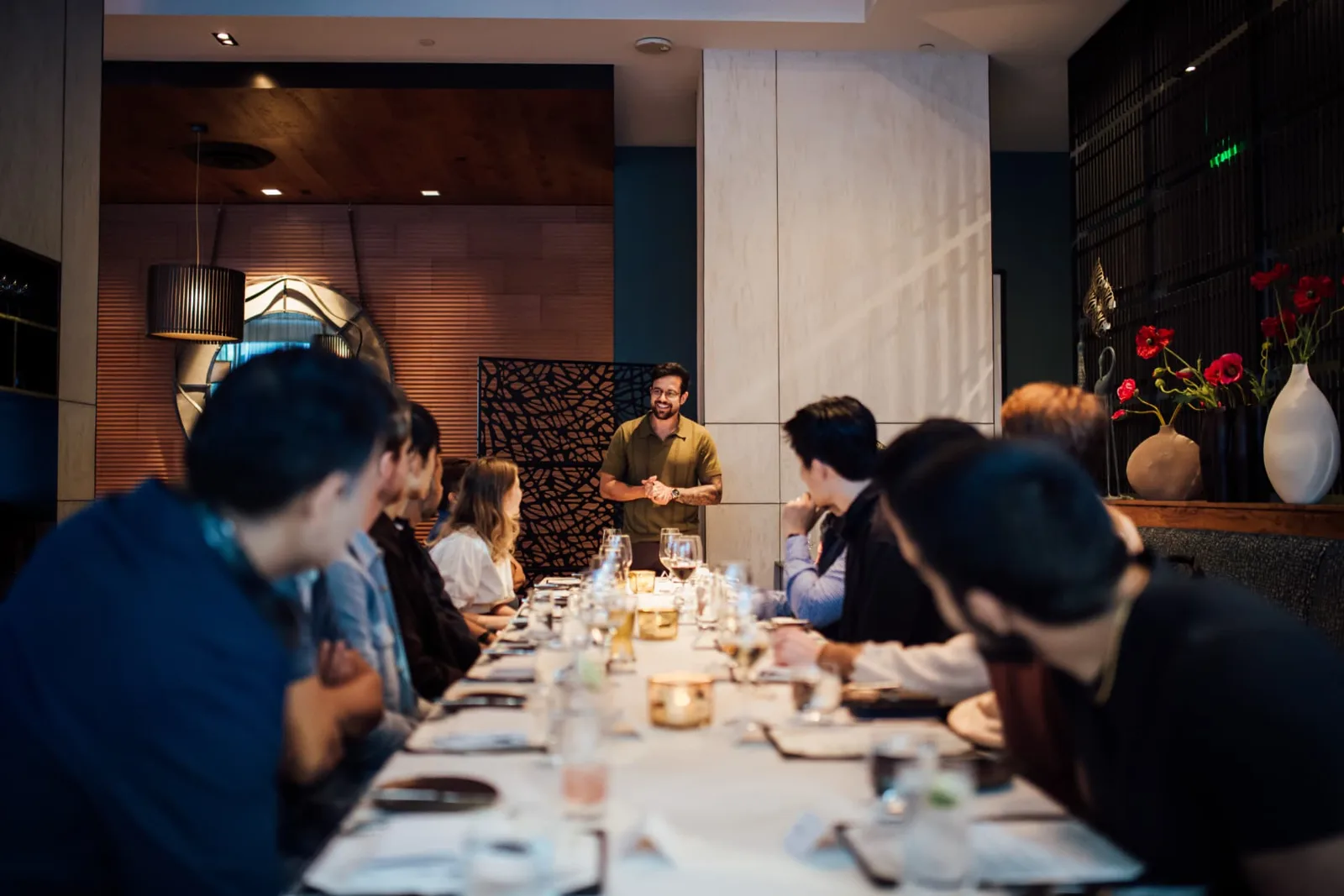
Before guests arrive
Prepare a one-sentence shared question and learn how to pronounce names. Review only the guest context relevant to that conversation, not a dossier of personal information. Agree sponsor boundaries and service cues with the venue. Confirm who hosts and who handles arrivals and logistics, so the host can stay with guests rather than chase operational questions.
Welcome people without reading their resumes
Explain why this group is together and who is hosting or sponsoring. Offer a short, optional introduction prompt about the shared topic, not a round of company pitches. Make it clear that guests may pass on any question. Introductions should give people a way into the conversation, not require them to perform.
Use questions that invite experience
Ask about decisions and experience rather than requesting a polished opinion. The hypothetical prompts below are starting points; choose what fits the room. Do not solicit confidential deals, personal data or information someone cannot share. If a guest starts down that path, offer a more general version of the question.
If one voice takes over
Acknowledge the point, then invite another perspective without putting anyone on the spot. Let people decline. If discussion becomes a pitch, bring it back to the shared problem. If the table fragments, let useful small conversations run before offering a shared question. There is no rigid timed agenda or promise of equal airtime; notice who wants to join without making participation compulsory.
Coordinate with dinner service
Use short transitions and protect time to eat. Avoid asking for a group answer while dishes are being cleared or guests are ordering. Check service cues quietly with the logistics owner. Adapt to the room rather than racing through prompts: a useful exchange is worth staying with, and a pause does not need to be filled. If a question falls flat, move on without asking guests to explain their silence. The aim is a comfortable conversation, not completion of every item on the cue card.
Close with permission
Thank guests and ask whether there is anything they would like to continue. Offer introductions only with both sides' consent. Avoid a blanket meeting ask or guest-list export. A host recap and personal follow-up are separate: summarize themes without attributing private comments, then leave individual next steps to the people who agreed to them.
Host cue card
- Shared question ready.
- Names and relevant context reviewed.
- Host, logistics owner and sponsor boundaries agreed.
- Optional prompts and permission to pass clear.
- Service cues and time to eat protected.
- Introductions and next steps require consent.