Executive dinners for founders
A useful founder dinner starts with a question your buyers already care about. We curate the guest list, you approve every name, and we host the evening end to end.
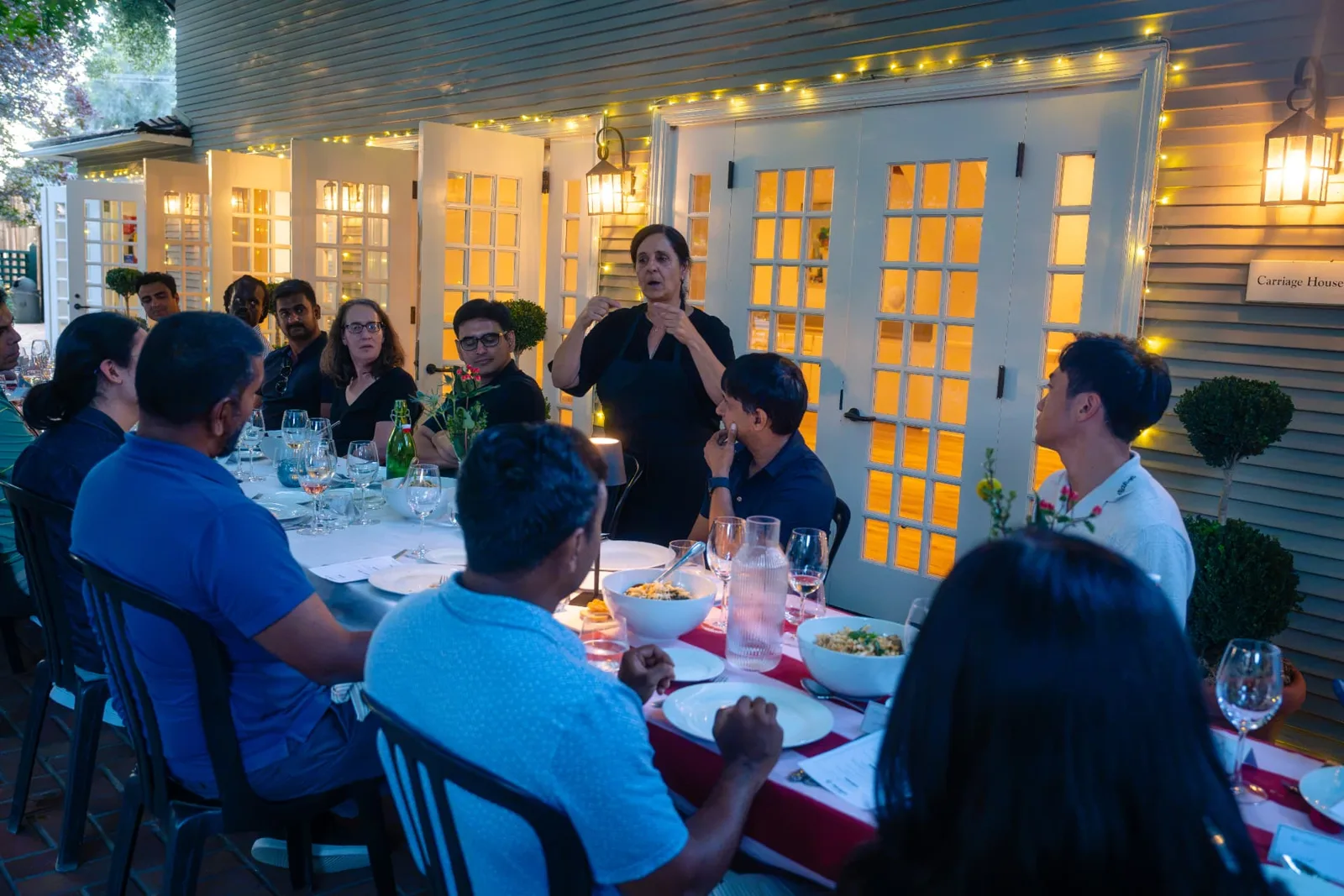
Choose the question before the restaurant
Founders can use a small room to learn how buyers describe a problem, build relationships, or meet people at target accounts. Choose one primary job - it decides who to invite and what to ask.
A dinner is not a substitute for a product that solves the problem.
Build a buyer-learning brief
A hypothetical example, not a case study - a brief this short is enough to plan the room around:
- Question
- What slows security reviews for growing software teams?
- Guests
- People who own or work directly on that process.
- Listen for
- The last time it happened, what they tried, who decides, and what a better outcome would look like.
- Avoid
- Turning every answer into a product pitch.
The brief then shapes the list. More on building an executive dinner guest list.
Peers, customers and prospects: choose the mix deliberately
Roles should follow the question, not title prestige. Tell guests who is hosting and why.
Keep the host team small enough that guests are not surrounded by sellers. Ask before sharing names, photos or contact details, and never imply that a guest's company is a customer.
Turn the evening into a next step, not a mailing list
Write down themes without attributing private comments. Deliver the resources and introductions you promised, with permission. Ask before suggesting a meeting.
Decide whether a dinner is the right instrument
A useful fit: a specific shared problem and people willing to discuss it. A weak fit: a broad awareness target, a generic invitation list, or no capacity for follow-up.
Evaluate what you learned and the next steps guests agreed to separately from revenue. A dinner doesn't guarantee a sale. More on why host IRL events?