Insights
why host irl events?
Short answer
Give your event one primary business job before choosing a venue or format. A well-curated room can support buyer conversations, relationships and market research, but it still needs relevant guests and thoughtful follow-up.
By Ed Giansante · Published
a lot of founders ask me some version of the same question: why host events at all?
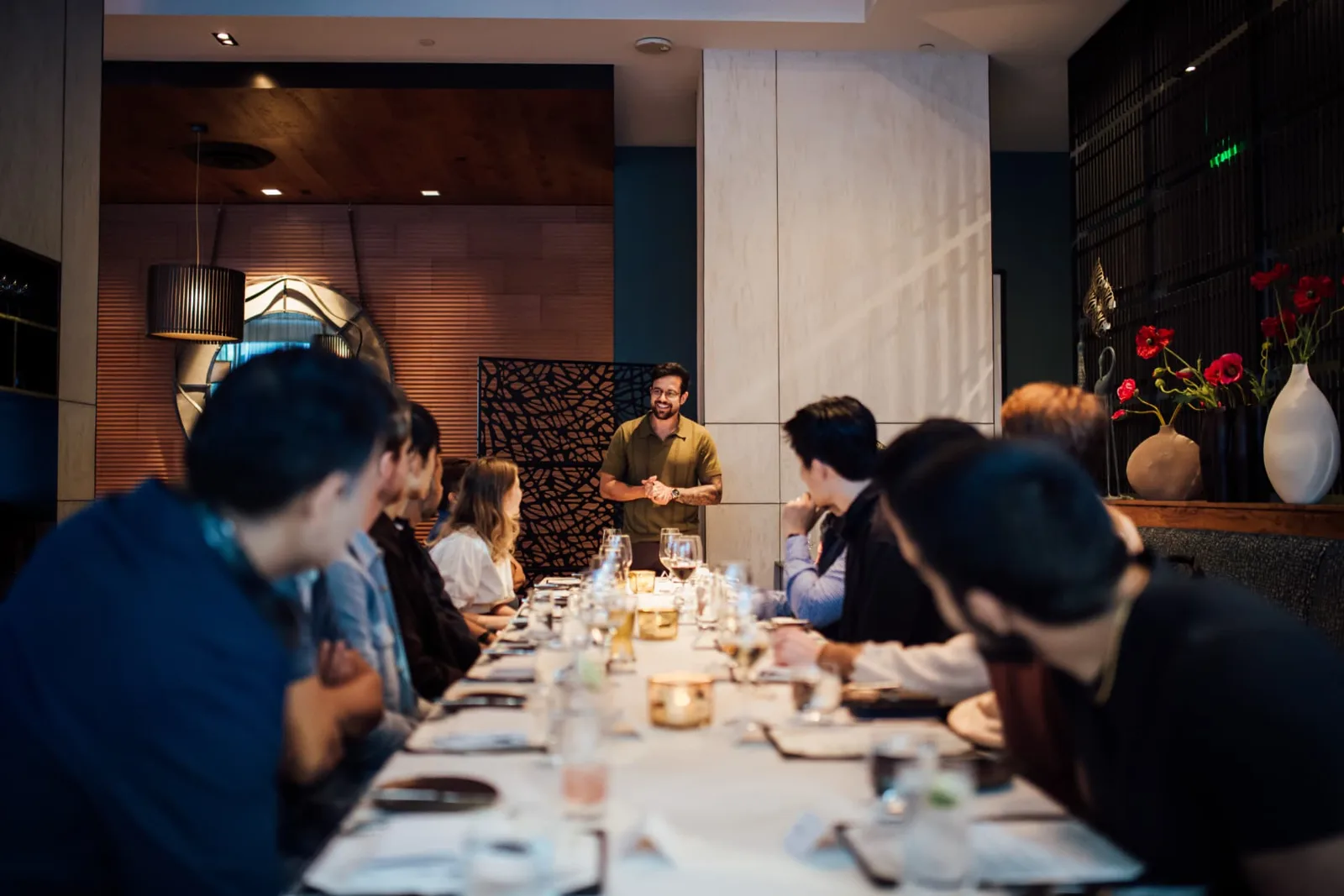
they usually already suspect the answer matters - they've watched competitors fill rooms. what they haven't done is connect "we should host something" to what it actually changes in the business.
so before formats, budgets, venues and guest lists, this is the question worth answering: what is the event for?
an event is an instrument, not a vibe
an event is not a branding exercise. it's a business instrument with a job to do.
when the job is clear, every decision gets easier - who to invite, which format, what to say in the invitation, and what to do afterwards.
the five jobs a room can do
1. move pipeline. a room full of the right people creates conversations that would take months of outreach to earn. a prospect who has eaten at your table is not a cold name anymore, and neither are the two people they offered to introduce you to. measure it in meetings booked and opportunities created or advanced - and remember that pipeline is a signal; roi needs revenue.
2. establish relationships. trust compresses in person. three hours at a table does what twenty touches online can't, because people decide how they feel about you far faster than they decide what they think about your product. the relationship is the asset that keeps paying long after the evening ends.
3. accelerate a sales process. a deal already in motion has stakeholders you've never met. one evening with the whole buying group around a table can replace a quarter of meetings - and it changes the tone of every call that follows.
4. warm up a lead. a cold name in your crm becomes a person who showed up, stayed for dessert, and told you what they're working on. every follow-up after that stops being cold.
5. gather intel and do research. a dinner is a focus group that doesn't feel like one. you hear the objections, the exact words buyers use, the priorities nobody puts in a survey. teams pay research firms for worse information than a good table gives you for the cost of the meal.
what a room won't do
it won't fix a weak guest list - the wrong twelve people are still the wrong twelve people, however good the food is. it won't replace follow-up: the 48 hours after the event decide whether the evening compounds or evaporates. and it won't produce reach worth reporting. if the metric is impressions, buy ads. they're cheaper.
one event, one primary job
a good evening can do several of these jobs at once, but it should be designed around one. the primary job decides the guest list, the format, the invitation and the follow-up; the others happen along the way.
once the job is named, the format follows - the five formats worth showing up for are here: lesupper.com/insights/five-event-formats-worth-showing-up-for. and the execution playbook - guest list, budget, sponsorship, follow-up, measurement - is here: lesupper.com/insights/b2b-event-marketing-guide.
measure it honestly
decide the outcome before the room, in writing: this dinner exists to create four first meetings, or to move two late-stage deals, or to get twenty buyers to tell us what they'll pay for next year. then review it at 30, 60 and 90 days against that sentence - not against how the photos looked. pipeline is a signal; roi needs revenue.
a note from the host
i generated $3m in pipeline from events in 2025 - and passed $20m this year, spending $60k on events in a year. the how is the guide above.
where to start
if you're asking this question, start with the room your buyers want to be in. we plan and host curated executive dinners end to end - and you approve every name on the list. tell us who you want in the room: hi@ed.community